



The Etiquette of Critiquing
- Apr 25, 2017
- 8 min read

When I first sat down to write this blog I focused on how to give constructive critiques to fellow writers. After some reflection, I realized I needed to include other aspects of writing critiquing. As important as it is to know the do’s and don’ts of offering critiques, it’s just as important to know how to receive a critique and/or operate within a critique circle. The rules of etiquette surrounding giving and receiving critiques are easy to remember. Hopefully you’ll find them just as easy to put into practice.
I came up with a simple acronym, ARCHED, to help you remember the rules of critiquing. ARCHED stands for Ask questions, Respect the writer, Constructive feedback only, Honesty is the best policy, Encourage as much as possible, and Don’t forget your compassion. Allow me to delve a little deeper into each one of these.
Asking Questions

Before you critique a piece, ask the author what kind of feedback they’re looking for. Are they submitting this to a contest? Do they want to publish? Is there a specific plot point or character they are struggling with? Knowing what type of critique they are seeking will help you focus on the specific areas of their skill set or written piece. It’s still important to focus on the piece as a whole, because the writer may be unaware of other problem areas. Some writers may only want a critique that overviews the entire piece. Whichever the case is, asking questions can only improve the critique.
Respect the Writer

Regardless of the writer’s skill level, natural talent or ability, or where they are in the journey of their written piece, the writer deserves your respect. It takes courage to show your written work to others. Recognize that courage by respecting them. They deserve your time, patience, advice, and kindness just as you would if the roles were reversed.
Adhere to any deadlines that have been set up, and if you don’t think you’ll make the deadline then say so. Keep the line of communication open, so the writer knows you haven’t forgotten about them. Remain patient through changing deadlines, or moments of crisis. Keep the writer’s experience level in mind whenever your patience is tried. Remember you’ve been tapped for your advice, and the writer trusts you to handle them with care. Respect is like glue: a little goes a long way.
Constructive Feedback Only

Criticism in any form can be difficult. It’s important to note a distinct difference between productive and unproductive criticism. Constructive criticism is a form of feedback which offers advice and support to help the person receiving it. If the feedback isn’t helpful, it’s only criticism. It’s pointing out the issues, or putting the person down without considering how it might affect them negatively. When people receive negative feedback without helpful options on how to fix the problem, they get discouraged and may decide to give up on their endeavor altogether.
This is especially true in the writing world. Writing is a personal activity, and when writers decide to put their works out for others to enjoy, it is daunting. Many writers grapple with anxiety over the idea of their work being judged. After all, they put time and effort into their piece, they have an emotional connection to it, and they may or may not be wanting to publish. So, when a writer is asking for a critique, keep in mind that your feedback should help them to achieve their goals while keeping them excited about their project.
Focus on the writing, not the writer. Leave out anything personal. Don’t worry about hurting their feelings with your honesty, but do worry about where you focus that honesty. Revealing plot holes or confusing dialogue is helpful. Telling the writer you don’t like the character is not helpful, unless you can explain why. Is it the character’s voice, are they under-developed, or do they fail to forward the plot? These types of observations are beneficial. If something doesn’t feel right, contemplate the ways in which that aspect of the writing might be improved versus dismissing it as not good.
Honesty is the Best Policy
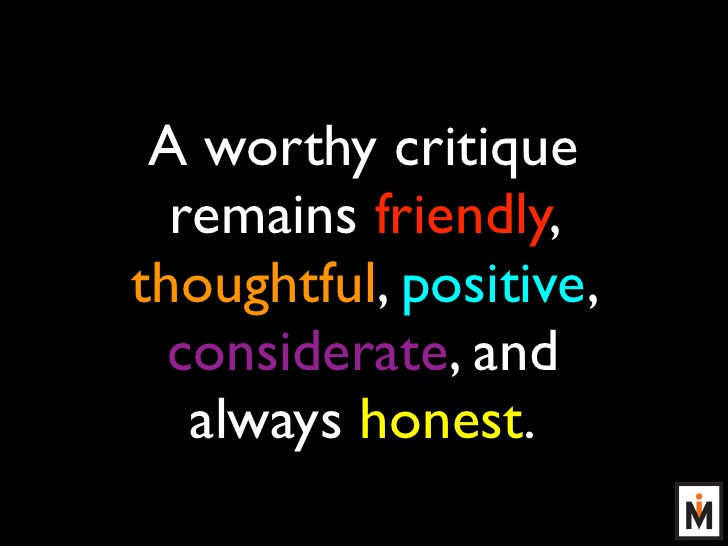
It is super important to remain honest when offering feedback to a writer. If they are planning on publishing, they need to make sure they put out the best product possible. Also feedback helps the writer to hone their own skill. They can only do this if you are honest with them about where their piece is and where it is heading. You’re probably not the only person they’re asking for feedback, but you might be the only one who notices a certain aspect that could turn their rough draft into a work of art.

Critiquing isn’t all butterflies and warm fuzzies. A good critique should be direct and honest. You don’t do anybody any favors by ignoring the weak points of the piece. If a writer’s characters need more development, they should know. If their action sequence is confusing and jumbled, they should know. If they have unwittingly developed huge plot holes, they should know. The reason writers need to be critiqued is because they are unable to see some of their own mistakes. They need outside perspectives to reveal hidden shortfalls. When used correctly, a good critique can improve a writer’s skill set.
Encourage as Much as Possible

Remember that praise goes a long way. The most troublesome manuscripts will have elements of brilliance (or at the very least, promise). Be sure to point out the areas where they’ve excelled as well when handing out pointers on their mistakes.
Don’t Forget Your Compassion
Writers are human, and the act of writing is personal. Critiquing is often the first step toward transcending an author’s work from personal to professional. Helping a fellow writer prepare their piece to be consumed by others is a privilege and should be treated as such. In many professional settings the straight forward, no-nonsense approach is often envied. However, in the writing world it’s important to straddle the line of professional and personal. When being entrusted to critique another’s work, remember your compassion. Keep in mind that you are dealing with a personal project of deep importance. Be thorough. Be honest. Also, be kind.
Don’t forget your manners, and take the time to phrase your advice in a way that the writer is least likely to become defensive. If the writer feels attacked, they may not let the advice sink in.
Receiving a Critique

Keeping the ARCHED rules in your head when giving a critique will help you remember the finer points of helping fellow writers, but what should you do when you’re the one receiving a critique? The writing world operates on quid-pro-quo. This basic “you scratch my back and I’ll scratch yours” dynamic is what keeps the writing community flowing with ideas and camaraderie. Chances are, you won’t just be giving critiques, but you’ll also be accepting them from others about your own pieces. When this happens, you’ll need to remember certain aspects of how to handle the critiques given you to.
First and foremost, do not take feedback personally. Most critiques you receive will be well intentioned. They will be for your benefit. Sometimes they will feel harsh or unfair, but if you allow yourself to have the right perspective, those filters of harsh and unfair will fall away and you’ll see the critiques as informative and revealing. Allow the constructive criticism to be constructive. Don’t stand in your own way by letting your feelings get hurt by honest feedback.

One of the biggest pieces of advice writers give is to set your rough draft down and come back to it later for revision. They say this because only time will give you the space you need to see your piece objectively. The same rule applies to receiving constructive feedback.
There are two main types of reaction to being critiqued. Initial reaction contains emotions that haven’t been sorted through. When someone is pointing out problems in your manuscript it’s easy to have a knee-jerk reaction that makes you want to jump on the defense and protect your piece. It’s better to wait for the perspective reaction which is more rational. It takes place after the critique has sunk in and you’ve had time to decipher which criticisms are spot on and which ones aren’t helpful or needed.

Learn to distinguish between a good critique and bad advice. Pick somebody who is familiar with the genre you write. Otherwise you may receive feedback better suited for other genres. A writer’s experience level affects the type of critique they give, so keep that in mind when asking for a review of your work. If they are new to the writing world, the advice may be well intenionted but ignorant and uninformed.

Don’t be afraid to speak up. Asking questions is just as important in receiving a critique as it is in giving one. If you’re confused by the advice coming your way then say so. Ask for examples where applicable. Any critique worth receiving should be clear and easily understood. If that’s not the case, then ask questions to achieve clarity. Also, don’t be afraid to defend your work. If your critique partner doesn’t seem to get your story, then it’s up to you to explain it to them. Tell them where you’re wanting the story to go. Tell them your original intentions. With this knowledge, they can adjust your critique to better suit your journey or direction.
Communication is extremely important, so make sure you interject where necessary to ensure your piece is getting the type of attention it deserves.
Behaving in a Critique Group

So far, I’ve been talking about critiquing as it might happen in a remote way. Many writers only do critiquing via email or in their own time because it allows for a thorough look-through. However, sometimes writers prefer to get their critiques in real time. Fortunately, there are several options to achieve this.
Critique circles (or groups) can happen in several settings. It can be a study group for a writing-heavy course. Sometimes it’s a writer’s group where people meet at a scheduled time every week or month to review each other’s work. Critique groups also exist online in social media and/or forums. Whichever type of group you belong to (or wish to belong to), keep in mind that real-time critiquing is slightly different than remote critiquing.
When you’re in a group critique, you’ll probably be participating in both giving and receiving feedback. When giving feedback, simply remember the ARCHED rules. For the most part they still apply here. When receiving feedback, be careful to not let your initial and emotional response run wild. Stay calm and take the advice with grace. Take advantage of the group setting by asking questions about the critiques you’re receiving. Basically, apply all the tips I’ve given, and keep your social graces about you. Everybody in the group should be willing to give and receive constructive criticism, so you’re not alone.

When operating within an online critique group, beware of trolls. No matter how moderated a group is… no matter how many rules of decency are in place… there will always be someone who slips through the cracks. When anonymity and/or distance is ensured, false bravery emerges. Sometimes this creates the type of person who will only bring negativity to the table. If you encounter someone in an online group who is only bashing, insulting, or fighting with other writers, AVOID THEM! If you can ignore them or block them, do so. If you can report them to a moderator, do so. These people are not there to help you. They only wish to tear you down to make themselves feel better, and that’s not constructive in the slightest. Don’t let them get to you. Recognize them as the internet troll they are, ignore them, and move on.

There is a fine art to critiquing. It takes time and experience to develop and hone your critiquing skills. Sometimes there’s a learning curve to receiving constructive feedback, but if you are diligent in evolving your abilities you will get to a place where you are able to receive a critique in a positive way. Remember to keep your head, your manners, and your feedback in check. The writing world needs writers who are willing to lift each other up and make each other better. If we practice etiquette in our interactions with other writers it can only improve our current written works and skill levels.


Comments